


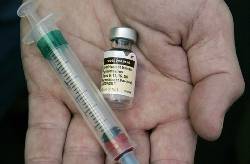
WASHINGTON (AP) — A single HPV vaccination appears just as effective as two doses at preventing the viral infection that causes cervical cancer, researchers reported Wednesday.
HPV, or human papillomavirus, is very common and spread through sex. Most HPV infections clear up on their own but some linger, causing cancers that appear years later, including cervical cancer in women and rarer cancers in both women and men.
HPV vaccination has been recommended for U.S. girls since 2006 and already the nation is counting fewer cases of precancerous cervical lesions among women in their 20s —- the first age group to start getting the shots back when they were tweens or teens.
But cervical cancer kills about 340,000 women worldwide annually — and the new findings from a huge study in Costa Rica could help spur global efforts to protect more girls and young women in harder-to-reach low-income countries.
Led by the U.S. National Cancer Institute, the study enrolled more than 20,000 girls between ages 12 and 16. Researchers tested two different HPV vaccines used around the world, giving half the girls one shot type and the rest the other. Then six months later, half of the girls got a second dose of their assigned vaccine — while the rest instead received an unrelated child vaccination.
They all were tracked for five years, receiving regular cervical tests for the most cancer-prone HPV strains. Infection rates were compared to a separate unvaccinated group.
A single HPV shot provided about 97% protection, similar to two doses, concluded researchers from the NCI and Costa Rica’s Agency for Biomedical Research. The findings were reported in the New England Journal of Medicine.
Previous studies had suggested one dose could work well but the new findings confirm strong protection for at least five years, Dr. Ruanne Barnabas, an infectious disease specialist at Massachusetts General Hospital, wrote in an accompanying editorial.
“We have the evidence and tools to eliminate cervical cancer. What remains is the collective will to implement them equitably, effectively, and now,” wrote Barnabas, who wasn’t involved in the Costa Rican study.
The U.S. recommends two HPV shots starting at age 11 or 12 for most girls and boys — as the virus also can cause head-and-neck and other cancers. Catch-up shots are recommended for anyone through age 26 who hasn't been vaccinated. The Centers for Disease Control and Prevention has reported about 78% of 13- to 17-year-olds have gotten at least one dose.
But globally, the World Health Organization estimates less than a third of adolescent girls have been vaccinated — and the agency already had begun recommending either one or two doses in an effort to broaden protection.
The new study offered no information about HPV-related cancers beyond the cervix, and the researchers cautioned that longer monitoring is needed.
—-
The Associated Press Health and Science Department receives support from the Howard Hughes Medical Institute’s Department of Science Education and the Robert Wood Johnson Foundation. The AP is solely responsible for all content.
...