


WASHINGTON (AP) — For many people, Thanksgiving can feel like a competitive eating event. But for Kim Dillard Davis, one of millions of American adults who take prescribed weight loss medications known as GLP-1s, it is a day like any other.
The 54-year-old Raleigh, North Carolina-based digital creator and wellness coach has lost around 80 pounds since 2023 using GLP-1s. Thanksgiving on a GLP-1 means she doesn't participate in the part of the holiday associated with indulgence.
“I can’t sit down and eat the amount of calories that I once could. I’ll still be able to sample everything, but I just can’t overdo it,” said Dillard Davis, who said she plans to be on the drug for life so long as her insurance is covering it.
More and more Americans are using GLP-1s, and as the medications become more popular, they could be changing some Americans’ approach to food-centric holidays like Thanksgiving, altering how they eat, what they enjoy about food and scrambling some social interactions surrounding food.
The jump in popularity comes as President Donald Trump's second administration has made expanding access to GLP-1s part of its health policy, arguing that the drugs, if made more affordable, could help combat rising obesity rates and other related chronic illnesses, eventually lowering broader healthcare costs.
While GLP-1s will likely cause major shifts in ways that are hard to predict, Ashley Gearhardt, a psychology professor at the University of Michigan, suggests the over-indulgence associated with the holiday could diminish over time.
“I anticipate that flavors and tastes that have been culturally linked with Thanksgiving will continue to be important. There just may be fewer turkey comas at the end of the day," she said.
Navigating the holiday while taking GLP-1s
Some people who use GLP-1s feel full faster and stay full longer, meaning they tend to eat smaller portions. The drugs have been reported to change how people think about food, reducing cravings and emotional eating but also diminishing the sensory pleasure people get from food. Some users also avoid eating rich or heavy foods, because the drugs can cause nausea or bloating.
Doctors say people who are just starting their weight loss journey this year with the drugs should be particularly mindful of potential side effects.
“Thanksgiving doesn’t have to be off-limits,” said John Horlander, a Louisville, Kentucky, gastroenterologist. “The key is moderation, smaller portions, avoiding excessive fatty foods, staying hydrated and recognizing warning signs.
"A little prevention can go a long way toward keeping someone out of the emergency room over the holiday.”
The Trump administration has framed its steps toward increasing access to and bringing down costs for GLP-1s as “a historic opportunity to reverse the obesity epidemic.” More than 100 million American adults are obese, according to the latest Centers for Disease Control and Prevention data.
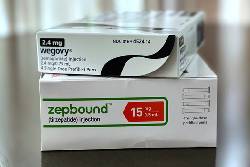
In 2025, Trump, a Republican, signed a deal with drugmakers Eli Lilly and Novo Nordisk to expand coverage and reduce prices for the popular weight loss drugs Zepbound and Wegovy.
And coverage of the drugs for obesity was expanded to Medicare patients this year when the federal government began offering a selection of the brand name medications to certain Medicare and Medicare Advantage beneficiaries for $50 a month through a new trial called Medicare GLP-1 Bridge. The program is scheduled to sunset after Dec. 31, 2027.
A June analysis by healthcare research nonprofit KFF found that 3.8 million Medicare beneficiaries could be eligible for the Medicare GLP-1 Bridge, based on claims data from 2023. The Centers for Medicare & Medicaid Services does not provide projections of how many people will start taking GLP-1s as a result of the Trump administration’s actions. The agency wants to expand access to GLP-1 treatments, said a spokesperson, who was not authorized to speak publicly and talked to The Associated Press on the condition of anonymity.
Those policy changes come as the share of people on GLP-1 medications for weight loss has risen in the past few years — 11% of U.S. adults said they currently take the drugs for weight loss purposes, according to a Gallup poll conducted in May and June 2026. The poll found that 15% of Americans report having used the medicine for weight loss, an increase of 9 percentage points from two years ago.
The social dynamics of eating
That means Americans, even if they aren't taking the drugs, could find more people on the medication who are sitting across from them at the Thanksgiving table. That could change how people talk about eating.
Gearhardt said that dinner guests should be mindful about not pushing loved ones to eat or commenting on appearances.
“We all have a tendency to kind of monitor and police each other’s eating behavior," said Gearhardt, who studies food marketing and how addictive processes shape eating behaviors and mental health.
Commenting on how little or how much someone is eating “usually isn’t a great relationship strengthener,” she said. GLP-1 users might be especially sensitive, she said, because Thanksgiving can evoke feelings of grief over losing the intense reward sensation of highly processed foods.
Dillard Davis advised family members not to ask, “Is that all you’re going to eat?”
“Leave that phrase off the table. We’ve spent our whole lives overeating. Let us eat small portions and be happy,” she said.
Babak Orandi, an obesity medicine specialist at NYU Langone Health, said, “There’s a social aspect of eating, especially around the holidays. We don’t want to lose that.”
Patients, Orandi said, should focus “a little bit less on weight loss and a little bit more on weight loss maintenance” during the holidays, so as to not lose the enjoyment of eating.
For Dillard Davis, Thanksgiving has changed in other ways. Because of the reduced appetite brought on by the medication and to avoid large quantities of leftovers at home, her family has spent the last four years celebrating Thanksgiving at restaurants.
But as someone who has been on a weight loss journey since she was 8 years old, she has learned to accept the changes.
“We still have to eat," she said. "Just don’t worry about it so much.”
...