


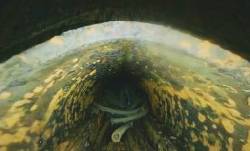
TOKYO (AP) — A video taken by tiny drones sent into one of three damaged reactors at the Fukushima Daiichi nuclear power plant showed a gaping hole in the thick-walled steel container of the core, with lumps of likely melted fuel debris hanging from it, in a first sighting of a pressure vessel bottom since the meltdown 15 years ago.
The rare footage was taken by micro-drones — measuring 12 by 13 centimeters (4.7 by 5.1 inches) and weighing only 95 grams (3.3 ounces) each — deployed for a two-week mission to collect visual, radiation and other data from inside the Unit 3 reactor. It was released late Thursday.
The March 11, 2011 massive quake and tsunami destroyed cooling systems at the Fukushima Daiichi plant, causing meltdowns at reactors No. 1, 2 and 3.
The three reactors contain at least 880 tons of melted fuel debris with radiation levels still dangerously high. Tokyo Electric Power Company Holdings, which manages the plant, successfully took tiny melted fuel samples from the Unit 2 reactor last year, but internal details remain little known.
TEPCO plans more remote-controlled probes and sampling to analyze melted fuel and to develop robots for future fuel debris removal that experts say could take decades more.
Sending drones as close as possible to the pressure vessel's bottom was an important goal of the latest probe, according to the plant operator, Tokyo Electric Power Company Holdings.
During multiple flight missions in the probe that began March 5, remote-controlled micro-drones, one at a time, carefully flew around debris, broken equipment and other obstacles to take footage inside the primary containment chamber, including around the bottom of the pressure vessel.
The footage showed tubes with ruptures and other damaged structures that used to be inside the pressure vessel, which originally was enclosed. It also showed brown and gray objects hanging like giant icicles.
TEPCO spokesperson Masaki Kuwajima said officials confirmed there was a hole at the bottom of the vessel and that those hanging objects, lumps and deposits are believed to be melted fuel debris.
The drones also collected radiation measurements and data to produce a detailed three-dimensional map of the inside of the Unit 3 reactor, Kuwajima said. “We have obtained valuable data that can be used for our future internal investigations and to develop melted fuel debris removal strategy.”
The latest drone mission came nearly a decade after an earlier underwater robot probe provided a less clear picture of the inside of the Unit 3 reactor.
...