


TYRE, Lebanon (AP) — Israel pressed on with bombarding southern Lebanon on Wednesday, a day after historic talks between Lebanese and Israeli officials in Washington. Smoke rose over the coastal city of Tyre, underscoring the fragility of diplomatic efforts.
Although Israeli strikes on Beirut have eased since last week's shattering 10-minute bombardment without warning killed over 350 people across the country, southern Lebanon remains under attack.
The Israeli military has periodically issued warnings urging residents to flee wide swathes of southern Lebanon as it targets the Iranian-backed Hezbollah militant group, but tens of thousands of people have stayed — either because they don't want to leave their homes or because they have nowhere to go.
Tyre, too, is under Israeli evacuation order, but many displaced families had seen it as a refuge of last resort, removed from the heaviest clashes closer to the Israeli border. Increasingly, though, residents say nowhere even in Tyre feels safe.
Across the city, the war was visible in shattered buildings, mounds of rubble and debris-strewn streets. Residents moved cautiously along wreckage-lined roads.
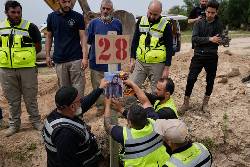
Mourners gathered for the funeral of 19-year-old Ghadir Baalbaki, killed overnight in an Israeli drone strike just outside Tyre’s city center. It was not immediately clear who was targeted, but witnesses said Baalbaki had been sitting outside her house when the drone hit nearby.
“I hugged Ghadir because I thought she had fainted. I kept trying to wake her up," Mariam Hamoud, her aunt, recalled from the temporary graveyard where Baalbaki was buried. Many families can't return to home villages to bury their dead because they are too close to the front lines.
Baalbaki’s father, Mohammed Baalbaki, stood beside the grave in tears.
“We cannot adapt to life without her," he said.
Across southern Lebanon, Israeli forces said they had struck more than 200 Hezbollah targets over the past 24 hours. Hezbollah claimed rocket attacks on military targets in northern Israel and on Israeli forces in the town of Khiam near the border, which has seen intense fighting in recent weeks.
Tuesday's talks between Lebanon and Israel in Washington have drawn backlash from Hezbollah and its supporters.
Hezbollah lawmaker Hassan Fadlallah on Wednesday castigated Lebanese authorities for what he called the “disgraceful image” of direct negotiations with Israel “at a time when it is killing Lebanese people and committing massacres." He called on the government to hold a popular vote on the future of Hezbollah's arsenal rather than decide its fate in talks with Israel.
Lebanon's government seeks the disarmament of Hezbollah, but the group has long defied such efforts.
“If it truly wants to prove it reflects the aspirations of the Lebanese people, then (the government) should accept a public referendum. We are ready for a referendum on these choices,” Fadlallah told reporters, saying he expected the results to show that a majority of Lebanese people support Hezbollah's militant activities.
On the streets of Beirut, Lebanese were divided on the talks. Some agreed with Hezbollah that Israel can only be stopped through military force.
“These negotiations do not represent us … it’s as if they never existed," said Mustafa Alaa Al-Din, who was displaced from southern Lebanon.
Others welcomed the talks, expressing support for any initiative that promises to hasten the end of the war.
“The negotiations are more in our interest than in Israel’s interest because we are the ones whose country is being destroyed, we are the ones suffering losses,” said Mohamed Saad, a Beirut resident.
The latest Israel-Hezbollah war began when Hezbollah fired missiles across the border days after the U.S. and Israel launched their war on Iran. Israel responded with an intense aerial campaign and ground invasion.
At least 2,167 people have been killed in Israeli strikes, Lebanon's health ministry said Wednesday, including 260 women, 172 children and 91 medical workers. More than 1 million Lebanese have been displaced.
___
Associated Press writers Fadi Tawil and Isabel DeBre in Beirut contributed to this report.
...